Steam Inhaler vs Nasal Irrigation: Understanding the Differences

Nasal congestion, a blocked nose, and sinus discomfort can make everyday activities difficult. Whether symptoms occur during allergy season, a common cold, or changes in the weather, many people look for ways to breathe more comfortably. Two options people often compare are steam inhalers and nasal irrigation.
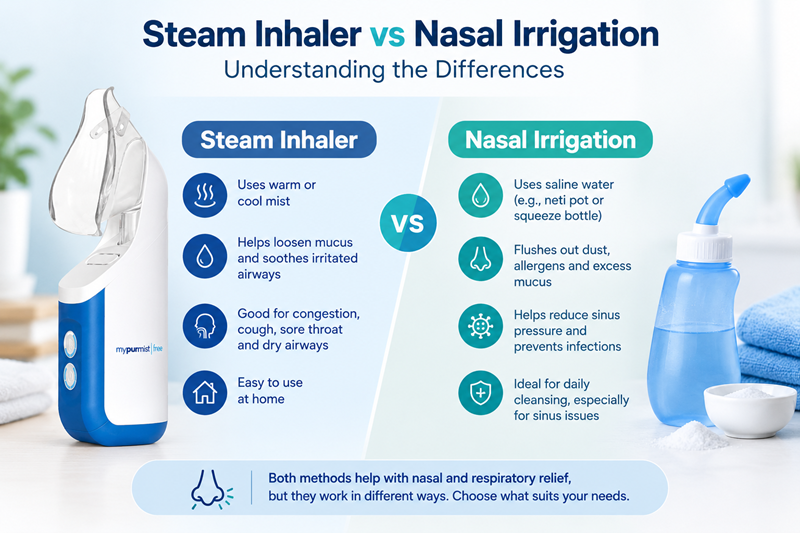
Although both are commonly discussed for nasal discomfort, they work in different ways. A steam inhaler delivers warm, moist vapour that you inhale, while nasal irrigation uses a saline solution to rinse mucus, allergens, and other particles from the nasal passages.
Understanding steam inhaler vs nasal irrigation can help you make an informed decision about which option may suit your needs. In this guide, we explain how each method works, its potential benefits, important safety considerations, and the key differences between them.
What Is a Steam Inhaler?
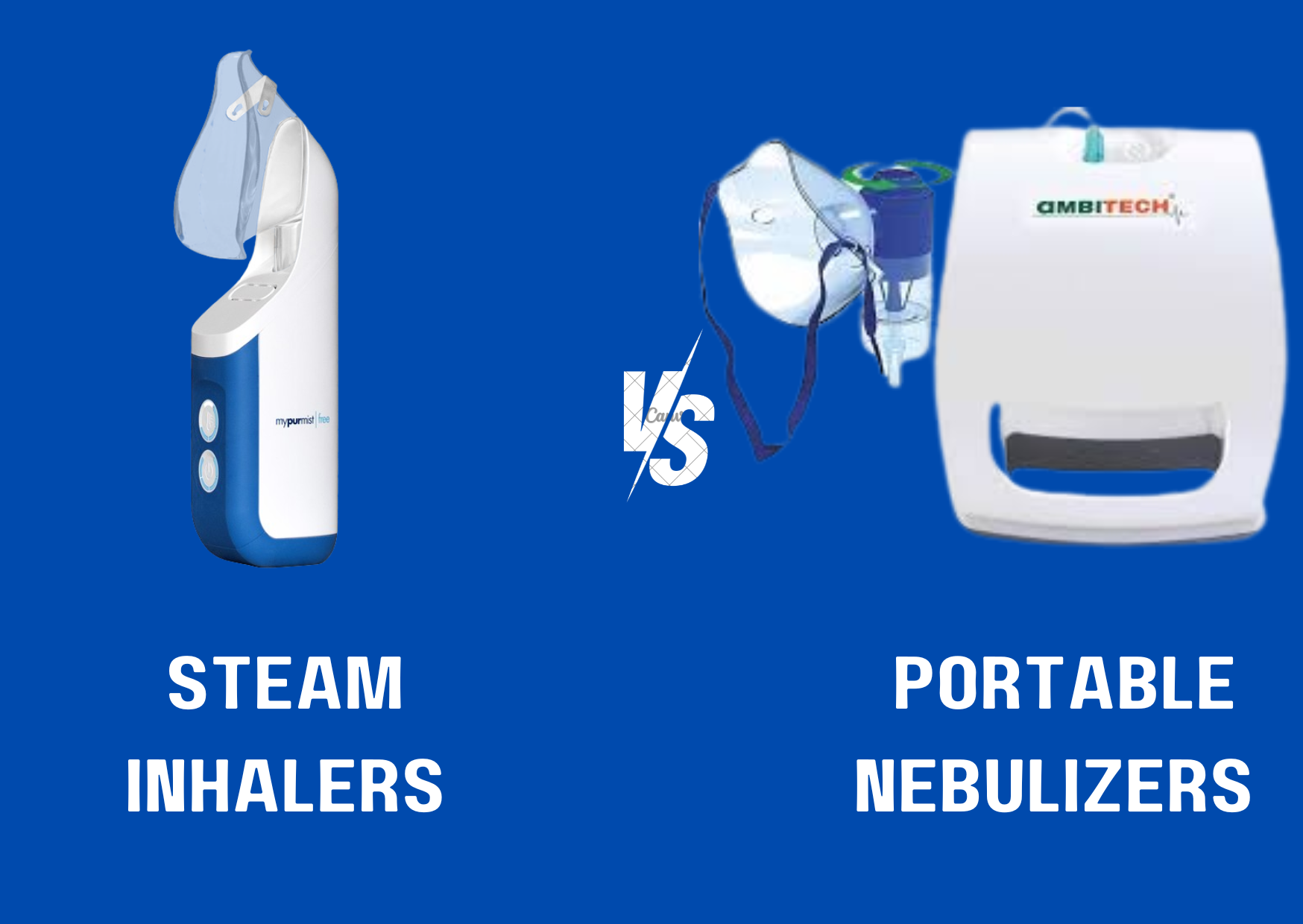
A steam inhaler is a device designed to deliver warm, moist vapour that a person inhales through the nose and mouth. It is commonly used by people seeking temporary comfort from nasal dryness, congestion, or throat irritation.
Unlike nasal irrigation, steam inhalation does not rinse the nasal passages with liquid. Instead, it exposes the airways to warm moisture, which may provide a soothing sensation.
How Does a Steam Inhaler Work?
A steam inhaler produces warm, moist vapour for inhalation. When you breathe it in, the moisture may temporarily soothe dry nasal passages and provide a feeling of comfort.
Some people prefer using a personal steam inhaler as part of their home comfort routine, particularly when the air feels dry or their nose feels irritated.
However, evidence that steam inhalation significantly relieves nasal congestion caused by a cold is limited. It should not be considered a treatment for the underlying cause of congestion or a replacement for prescribed medication.
Potential Benefits of Steam Inhalation
Depending on the device and how it is used, steam inhalation may offer the following comfort-related benefits:
- Moisture for dry nasal passages: Warm, moist air may temporarily soothe a feeling of nasal dryness.
- A soothing sensation: Inhaling warm moisture may feel comforting when your nose or throat feels irritated.
- A simple home routine: A personal steam inhaler can provide a dedicated way to inhale warm moisture at home.
- Convenient use: Some personal devices are designed for regular home use according to the manufacturer's instructions.
Steam inhalation also has limitations. It does not physically wash allergens or mucus out of the nose, and hot steam can cause burns. Follow the device's safety instructions and avoid inhaling steam from bowls of boiling water.
What Is Nasal Irrigation?
Nasal irrigation is a method of rinsing the nasal passages with a saline solution, which is a mixture of salt and water. It is commonly used to help remove excess mucus, dust, allergens, and other particles from the nose.
Nasal irrigation may be performed using a neti pot, a squeeze bottle, or a specially designed nasal rinse device.
Unlike steam inhalation, nasal irrigation introduces a liquid solution directly into the nasal passages. This allows the solution to help flush out unwanted material rather than simply providing moisture through inhalation.
How Does Nasal Irrigation Work?
During nasal irrigation, saline solution flows into one nostril and drains through the other nostril or back out of the same nostril, depending on the device and technique.
The rinse may help loosen and remove thick mucus and clear allergens or other irritants from the nasal passages.
Nasal saline irrigation is commonly used as a supportive measure for certain nasal symptoms, including allergy-related congestion. Its suitability depends on the person's symptoms, medical history, and ability to perform the procedure correctly.
Potential Benefits of Nasal Irrigation
Nasal irrigation may offer several benefits when used appropriately:
- Removes mucus: The saline solution can help flush excess mucus from the nasal passages.
- Washes away allergens: It may remove some pollen, dust, and other irritants from the nose.
- Supports nasal comfort: Rinsing may help relieve certain symptoms associated with allergies and nasal congestion.
- Helps clear thick secretions: Saline can help loosen mucus, making it easier to drain.
Nasal irrigation requires proper technique and careful hygiene. Always use distilled or sterile water, or tap water that has been boiled and cooled according to public health guidance. Never use untreated tap water for nasal rinsing. Clean and dry the device according to its instructions.
Steam Inhaler vs Nasal Irrigation: Key Differences
Although both methods are used for nasal comfort, they differ in how they work and what they are designed to do.
|
Feature |
Steam Inhaler |
Nasal Irrigation |
|
Main method |
Inhaling warm, moist vapour |
Rinsing the nose with saline solution |
|
Primary purpose |
Provides temporary moisture and soothing comfort |
Helps flush mucus, allergens, and particles from nasal passages |
|
Uses water directly inside the nose |
No, not as a nasal rinse |
Yes |
|
Helps remove allergens |
Does not physically wash them out |
Can remove some allergens through rinsing |
|
Equipment |
Personal steam inhaler |
Neti pot, squeeze bottle, or nasal rinse device |
|
Water safety |
Follow device instructions and avoid scalding vapour |
Use only distilled, sterile, or properly boiled and cooled water |
|
Main precautions |
Risk of burns from hot steam or surfaces |
Incorrect water quality, poor hygiene, or improper technique |
The main difference is straightforward: steam inhalation delivers moisture, while nasal irrigation physically rinses the nasal passages. Neither method is suitable for every person or every cause of nasal congestion.
Which Is Better for Sinus Congestion Relief?
The answer depends on what is causing your symptoms and what kind of relief you are seeking.
When Might a Steam Inhaler Be Suitable?
A steam inhaler may appeal to people who prefer inhaling warm moisture for temporary comfort. It may be considered when the nose or throat feels dry or irritated.
However, research has not established that steam inhalation consistently improves nasal blockage or shortens the duration of a common cold. People should also consider the risk of burns, particularly when using devices that produce hot steam.
If you choose a personal steam inhaler, use it only as directed by the manufacturer.
When Might Nasal Irrigation Be Suitable?
Nasal irrigation may be more appropriate when the goal is to wash mucus, pollen, or other particles out of the nasal passages.
It may help some people manage symptoms associated with allergic rhinitis or nasal congestion. However, it must be performed correctly, using safe water and a clean device.
If you have completely blocked nasal passages, frequent nosebleeds, recent nasal surgery, or significant ear discomfort, seek medical advice before attempting nasal irrigation.
Can You Use Both Methods?
Steam inhalation and nasal irrigation serve different purposes, so one does not automatically replace the other. Some people may consider them at different times as part of a nasal comfort routine, but there is no need to use both routinely.
Your choice should depend on your symptoms, personal preferences, and advice from a healthcare professional when needed. Neither approach should delay medical assessment for persistent or severe symptoms.
Safety Tips for Steam Inhalation and Nasal Irrigation
Safety is important regardless of which method you choose.
Steam Inhaler Safety
Follow these precautions when using a steam inhaler:
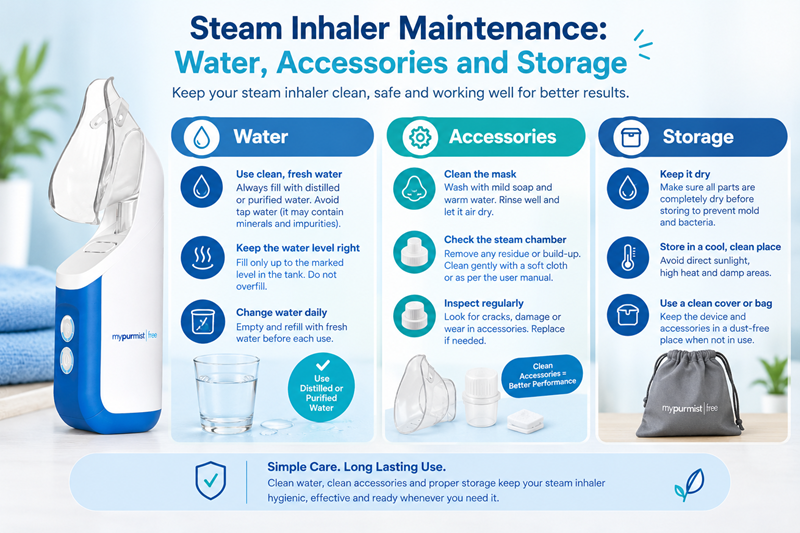
- Follow the manufacturer's instructions for filling, operating, and cleaning the device.
- Avoid boiling-water bowls and other improvised steam inhalation methods because of the risk of serious burns.
- Keep hot water and heated components away from children.
- Do not add essential oils, medicines, or other substances unless the device instructions specifically permit them.
- Stop using the device if it causes discomfort, dizziness, or breathing difficulties.
People with asthma or other respiratory conditions should seek professional advice if warm vapour triggers their symptoms.
Nasal Irrigation Safety
For safer nasal irrigation, follow these recommendations:
- Use distilled or sterile water, or tap water that has been boiled and cooled according to appropriate public health guidance.
- Use a saline solution prepared according to the device instructions or a suitable commercial saline preparation.
- Never force the solution through a blocked nasal passage.
- Clean and dry the irrigation device after every use as directed.
- Avoid sharing nasal irrigation equipment with other people.
Stop if the procedure causes significant pain, bleeding, or persistent ear discomfort, and seek medical advice when appropriate.
Other Ways to Manage Nasal Congestion
Alongside steam inhalation or nasal irrigation, other measures may help manage nasal symptoms.
Drinking enough fluids can support normal hydration, while avoiding smoke, dust, and known allergens may reduce irritation. Saline nasal sprays can also help moisturise nasal passages or loosen mucus, depending on the product.
People with persistent allergies may benefit from discussing suitable treatments with a pharmacist or healthcare professional. Depending on the cause of symptoms, options may include antihistamines or nasal corticosteroid sprays.
Seek medical advice if symptoms persist, repeatedly return, or interfere with sleep and daily activities. Urgent assessment is appropriate for severe breathing difficulties, swelling around the eyes, vision changes, or a severe headache accompanied by other concerning symptoms.
Conclusion
When comparing steam inhaler vs nasal irrigation, the most important difference is how each method works. A steam inhaler delivers warm, moist vapour for temporary comfort, while nasal irrigation uses saline to rinse mucus, allergens, and other particles from the nasal passages.
Nasal irrigation may be more useful when you want to flush material from your nose, while a steam inhaler may appeal to you if you prefer inhaling warm moisture. However, the evidence for steam inhalation relieving congestion is limited, and both methods require appropriate precautions.
Consider your symptoms, follow the correct safety instructions, and seek professional advice if your nasal congestion is persistent or severe. Choosing an appropriate approach starts with understanding the cause of your symptoms and the purpose of each method.
Frequently Asked Questions
Is a steam inhaler better than nasal irrigation?
Neither is universally better. Nasal irrigation physically rinses mucus and allergens from the nose, while steam inhalation delivers warm moisture that may provide temporary comfort. The appropriate choice depends on your symptoms and individual circumstances.
Can nasal irrigation help with sinus congestion?
Nasal irrigation may help remove excess mucus and irritants from the nasal passages. Some people find it useful for managing allergy-related nasal symptoms, but results vary and it does not treat every cause of sinus congestion.
How often can you perform nasal irrigation?
The appropriate frequency depends on your symptoms, the device, and the saline product. Follow the product instructions or your healthcare professional's advice, and use safe water every time.
Is steam inhalation safe for everyday use?
Safety depends on the device and how it is used. Follow the manufacturer's instructions, avoid scalding steam, and do not add unapproved substances. Ask a healthcare professional if you have an underlying respiratory condition or experience worsening symptoms.
Can I use nasal irrigation and a steam inhaler on the same day?
They have different purposes, and some people may use both. However, routine use of both is not necessary for everyone. Consider your symptoms, use each method safely, and ask a healthcare professional if you are unsure which approach is appropriate.