Steam Inhaler Maintenance: Water, Accessories and Storage

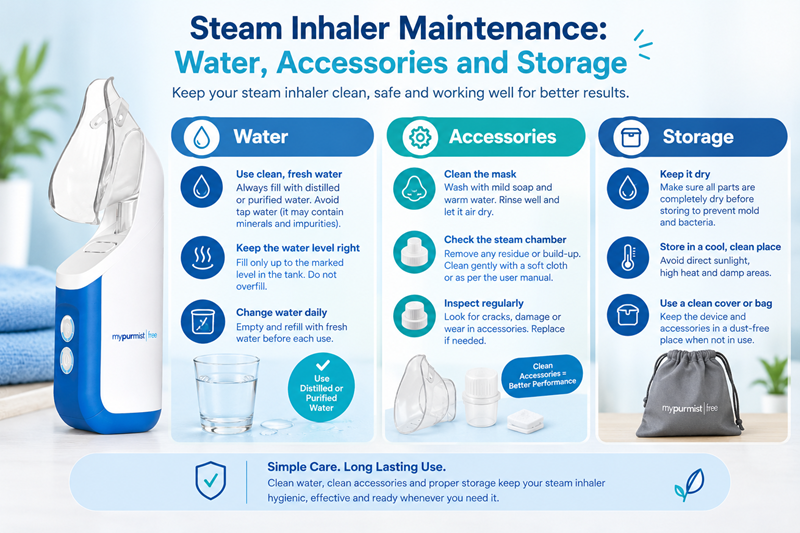
A steam inhaler can be a useful addition to your home comfort routine, but keeping it clean and storing it correctly are important parts of regular use. Water quality, accessory care, and proper storage can all affect the hygiene and condition of your device.
Whether you use a personal sterile occasionally or regularly, following the manufacturer's care instructions can help you maintain it and identify potential problems before they become more serious.
In this guide, we explain steam inhaler maintenance, including choosing the right water, cleaning accessories, preventing mineral deposits, and storing your device safely between uses.
Why Is Steam Inhaler Maintenance Important?
Regular steam inhaler maintenance helps keep your device clean, supports reliable operation, and reduces the risk of problems caused by residue or improper storage.
When water remains inside a device for long periods, mineral deposits may accumulate, depending on the water quality and the device design. Moisture left around the reservoir, mask, or other accessories can also create hygiene concerns if the equipment is not cleaned and dried according to the manufacturer's instructions.
Proper maintenance offers several practical benefits:
- Better hygiene: Cleaning the device as directed helps remove residue and reduces contamination risks.
- Reliable operation: Removing permitted mineral deposits can help prevent buildup from interfering with device components.
- Accessory care: Correct cleaning and handling can help protect masks, mouthpieces, and other removable parts.
- Longer service life: Following the recommended care routine helps avoid unnecessary wear and damage.
- Safer storage: Keeping the device dry and protected helps prevent problems between uses.
Maintenance requirements differ between steam inhaler models, so always consult your product manual before cleaning, descaling, or replacing parts.
1. Choose the Right Water for Your Steam Inhaler
Water quality is one of the first things to consider when caring for a steam inhaler. However, the correct type of water depends on the manufacturer's instructions and the design of your particular device.
Can You Use Tap Water in a Steam Inhaler?
Some steam inhalers are designed for tap water, while others may recommend distilled or demineralised water. Check your user manual before filling the reservoir.
Hard water contains minerals such as calcium and magnesium. When water is heated and evaporates, these minerals can remain behind and gradually form deposits inside the device.
If your local tap water is hard, mineral buildup may occur more quickly in a device that permits tap water.
Should You Use Distilled Water?
Distilled water contains fewer dissolved minerals than ordinary tap water and may help reduce mineral deposits in compatible devices.
However, distilled water is not automatically required for every steam inhaler. Some products have specific water requirements, and using a type of water that differs from the manufacturer's recommendations may affect operation or warranty coverage.
Follow these guidelines:
- Check the manual for approved water types.
- Use distilled or demineralised water only if permitted or recommended.
- Avoid adding essential oils, fragrances, medicines, or other substances unless the manufacturer explicitly allows them.
- Empty unused water after each session if instructed.
- Do not leave standing water in the reservoir between uses unless the manual specifies otherwise.
Using the correct water from the beginning can make regular steam inhaler care easier.
2. How to Clean a Steam Inhaler Properly
Cleaning your steam inhaler according to the manufacturer's instructions is an essential part of routine maintenance. The cleaning method will depend on whether the device has a removable reservoir, detachable mask, or other accessories.
Step 1: Switch Off and Unplug the Device
Before cleaning, switch off the steam inhaler and disconnect it from the power supply if applicable.
Allow the device to cool completely before handling the reservoir or other heated components. Never clean a hot device or touch hot water inside it.
Step 2: Empty the Reservoir
Once the device has cooled, empty any remaining water as directed in the user manual.
Avoid pouring water into electrical openings or parts that are not designed to get wet. Follow the recommended emptying procedure for your model.
Step 3: Clean Removable Accessories
If the mask, mouthpiece, or other components are removable, clean them using the method specified by the manufacturer.
Some accessories may be suitable for washing with mild soap and water, while others may require a different cleaning method. Do not assume that every component can be submerged, boiled, or placed in a dishwasher.
Step 4: Clean the Reservoir and Exterior
Clean the water reservoir and exterior surfaces as instructed. Use only approved cleaning materials and avoid abrasive pads, harsh chemicals, or solvents that could damage the device.
Never immerse the main electrical unit in water unless the manufacturer specifically states that it is designed for this.
Step 5: Allow All Components to Dry
Let the cleaned components air-dry completely in a clean location before reassembling or storing the device.
Do not close the device or place damp accessories in a storage case, as trapped moisture can create hygiene concerns.
3. How to Prevent Mineral Buildup Inside a Steam Inhaler
Mineral deposits can develop when water containing dissolved minerals is heated repeatedly. Over time, this residue may collect around the reservoir or other water-contact surfaces.
The amount of buildup depends on your water quality, how often you use the device, and its design.
To help manage mineral deposits:
- Use the water type recommended in your manual.
- Empty and clean the reservoir as directed after use.
- Inspect accessible water-contact surfaces regularly.
- Follow the manufacturer's descaling schedule, if one is provided.
- Avoid scraping deposits with sharp objects.
- Never use vinegar, citric acid, or commercial descaling products unless they are specifically approved for your model.
If you notice heavy scale, unusual noises, reduced vapour output, or signs of damage, stop using the device if necessary and consult the manufacturer or an authorised service provider.
Do not attempt to dismantle internal components unless the instructions specifically permit it.
4. How to Maintain Steam Inhaler Accessories
Steam inhaler accessories need attention because they may come into contact with your face, hands, or moisture during use.
Common accessories include masks, mouthpieces, connecting components, and removable reservoirs. Not every device includes all these parts.
Clean Masks and Mouthpieces
Follow the manufacturer's instructions for cleaning masks and mouthpieces after use. If these components are removable and washable, clean them using the approved method and allow them to dry completely.
Avoid sharing personal accessories with other people unless the manufacturer provides specific instructions for safe shared use.
Inspect Accessories for Wear
Regularly check accessories for visible cracks, deformation, loose connections, or other signs of damage.
Damaged parts may not fit correctly or function as intended. Replace accessories with compatible parts recommended by the manufacturer.
Avoid Unapproved Cleaning Products
Strong chemicals, abrasive cleaners, and unapproved disinfectants may damage plastic, seals, or other materials.
Do not assume that a product labelled as a household disinfectant is suitable for a steam inhaler. Use only approved cleaning methods and products.
5. How to Store a Steam Inhaler Safely
Correct storage helps protect your device from dust, accidental damage, and unnecessary moisture exposure.
After cleaning, ensure that the device and removable accessories are completely dry. Store them in a clean, dry location away from direct sunlight, excessive heat, and damp areas.
Best Storage Practices
Follow these simple steam inhaler storage tips:
- Keep the device dry: Allow all cleaned components to dry before storage.
- Choose a clean location: A dry cupboard or suitable storage area can help protect the device from dust.
- Protect accessories: Keep detachable parts together in a clean, dry container or case when appropriate.
- Avoid excessive heat: Do not leave the device near heaters or in locations exposed to extreme temperatures.
- Protect the power cord: Avoid tight bends, pulling, or wrapping the cord too tightly around the device.
- Follow storage instructions: Check the recommended temperature range and any requirements for long periods without use.
If your device will not be used for several weeks or months, consult the manual for long-term storage instructions.
6. Common Steam Inhaler Maintenance Mistakes to Avoid
Even a well-designed device can develop problems if it is cleaned or stored incorrectly. Avoid these common mistakes.
Leaving Water in the Device
Standing water may leave mineral residue or create hygiene concerns. Empty the reservoir after use when instructed by the manufacturer.
Reassembling the Device While It Is Damp
Moisture trapped inside the device or storage case may cause hygiene issues. Allow all components to dry completely before reassembly or storage.
Using Unapproved Additives
Essential oils, perfumes, medicines, and other additives may damage the device or create inhalation risks if the product is not designed for them. Never add substances without explicit manufacturer approval.
Using the Wrong Cleaning Method
Boiling accessories, immersing electrical components, or using harsh chemicals can damage parts. Always check which components are washable and which cleaning products are permitted.
Ignoring Signs of Damage
Cracked accessories, damaged cords, leaks, unusual smells, or unexpected changes in operation should not be ignored. Stop using the device if you suspect a safety problem and contact the manufacturer for guidance.
7. How Often Should You Maintain a Steam Inhaler?
The appropriate maintenance schedule depends on the device and how frequently you use it. Follow the manufacturer's instructions rather than applying a single schedule to every model.
As a general guide, you can use the following checklist alongside your product manual.
|
Maintenance task |
Suggested timing |
|
Check the device before use |
Before each session |
|
Empty remaining water |
After use, if instructed |
|
Clean removable accessories |
According to the manual, often after use |
|
Inspect for mineral deposits |
Regularly |
|
Descale the device |
Only as directed by the manufacturer |
|
Check cords and components for damage |
Regularly and before use |
|
Clean and dry before long-term storage |
Before storing for an extended period |
This routine is a general reference, not a substitute for the specific care requirements of your steam inhaler.
Conclusion
Good steam inhaler maintenance starts with using the correct water, cleaning the device according to the manufacturer's instructions, caring for accessories, and storing everything in a clean, dry location.
Regular inspection can also help you identify mineral deposits, damaged components, or other problems before they affect normal operation. Avoid unapproved cleaning chemicals, additives, and descaling methods, and never handle the device while it is hot.
By following these simple steam inhaler care and storage practices, you can keep your device in better condition and support a consistent home-use routine.
Always refer to your product manual for model-specific instructions. If your device shows signs of damage or does not operate as expected, contact the manufacturer or an authorised service provider before using it again.
Frequently Asked Questions
Can I use tap water in my steam inhaler?
That depends on your model. Some steam inhalers permit tap water, while others recommend distilled or demineralised water. Check the manufacturer's instructions to determine which water is suitable.
How often should I clean my steam inhaler?
Follow the cleaning schedule in your product manual. Removable accessories may require cleaning after use, while the reservoir and other components may have different maintenance requirements.
Can I use vinegar to descale my steam inhaler?
Only if the manufacturer specifically approves vinegar for your model. Some materials and internal components may be damaged by acidic cleaning solutions.
How should I store my steam inhaler when it is not in use?
Clean the device as directed, allow all components to dry completely, and store it in a clean, dry place away from excessive heat and direct sunlight. Follow any additional long-term storage instructions.
Can I add essential oils to a steam inhaler?
Do not add essential oils unless the manufacturer explicitly states that the device supports them. Unapproved additives may damage the device or cause irritation during inhalation.
What should I do if my steam inhaler develops mineral deposits?
Check the user manual for approved descaling instructions. Do not scrape deposits with sharp tools or use unapproved cleaning products. If buildup affects the device's operation, contact the manufacturer or an authorised service provider.